

“Drop-in” Fuel Enables 90% Greenhouse Gas Reduction for Singapore-Thailand Route
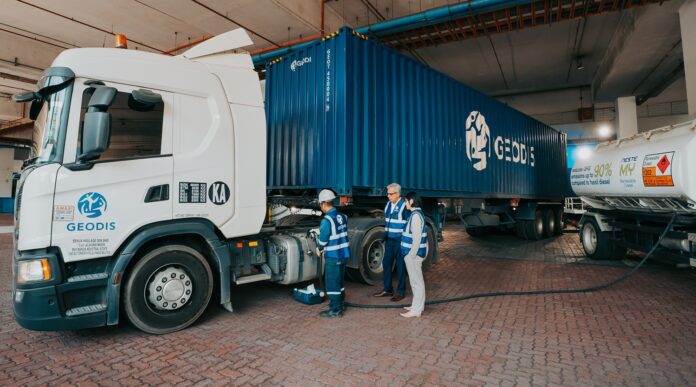
GEODIS has successfully launched the first cross-border trucking operation in Southeast Asia powered by Neste MY Renewable Diesel™. The pilot marks a major milestone in the decarbonization of the company’s regional road network, utilizing a dedicated Euro-5 truck to transport cargo between Singapore and the Thailand-Malaysia border.
Produced from 100% renewable raw materials—such as used cooking oil and animal fat waste—renewable diesel (also known as hydrotreated vegetable oil or HVO) offers an immediate solution for reducing environmental impact. Unlike traditional biodiesel, it is a “drop-in” fuel, meaning it can be used in existing diesel engines without any modifications to the vehicle or fueling infrastructure.
Strategic Partnerships for a Greener Supply Chain
The initiative is a collaborative effort involving three key industry leaders:
- GEODIS: Managing the logistics operations and evaluating real-world performance for wider Asia Pacific adoption.
- Neste: The world’s leading producer of sustainable fuels, providing the high-quality renewable diesel.
- Interion: A Singapore-based provider managing the fuel distribution and delivery logistics for the pilot.
Esther Cheong, Regional Sustainability Director for GEODIS Asia Pacific and Middle East, noted that transitioning to renewable fuels is a critical component of the company’s mission to build sustainable supply chains. The pilot aims to demonstrate the practical benefits of HVO, including up to a 90% reduction in lifecycle greenhouse gas (GHG) emissions compared to conventional fossil diesel.
Aligned with Global Climate Targets
This pilot is part of GEODIS’ broader commitment to its SBTi-approved climate targets. These goals align with the 2015 Paris Agreement’s objective to limit global temperature rise to 1.5°C. By the end of 2025, GEODIS also achieved the prestigious CDP “A” score, recognizing its leadership in environmental transparency and concrete actions toward decarbonization.
Beyond reducing carbon intensity, renewable diesel improves local air quality by significantly lowering tailpipe emissions, including fine particulates, nitrogen oxides, and carbon monoxide. Following the success of this initial cross-border run, GEODIS plans to scale renewable fuel adoption across its fleet throughout the ASEAN region, offering customers a smarter, cleaner way to move goods across borders.
อัพเดตข่าวสารและบทความที่น่าสนใจในอุตสาหกรรมโลจิสติกส์ก่อนใคร ผ่าน Line Official Account @Logistics Mananger เพียงเพิ่มเราเป็นเพื่อน @Logistics Manager หรือคลิกที่นี่