


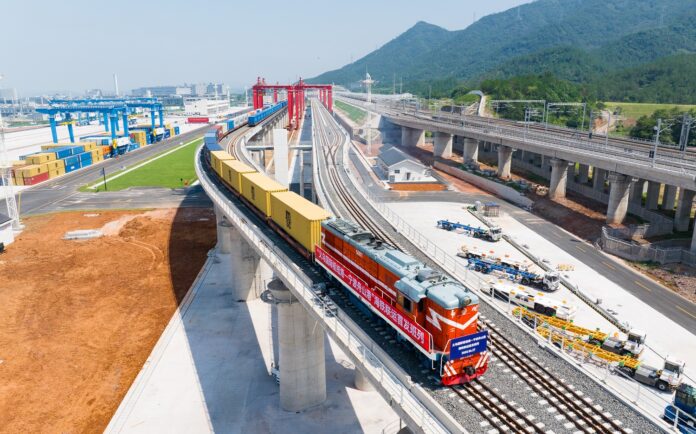
China has officially launched its first mixed-mode autonomous railway container terminal, setting a new benchmark for modernising freight infrastructure and driving down nationwide logistics costs. Located in Suxi, Yiwu, Zhejiang Province, the terminal integrates intelligent automation and traditional operations, enabling smarter, faster, and more sustainable transport solutions.
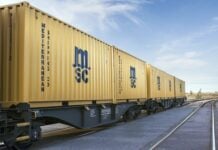
The facility commenced operations with the departure of the inaugural sea-rail intermodal freight train from Yiwu International Hub Port to Ningbo-Zhoushan Port, the world’s busiest seaport by cargo tonnage.
A First-of-Its-Kind in China
The Suxi Container Handling Station is China’s first railway terminal to feature autonomous driving in a mixed operation mode. It has been designated as an experimental zone for autonomous rail yard technology, according to the Hangzhou Railway Logistics Center.
Equipped with remote-controlled gantry cranes, intelligent transporters, and automated storage systems, the terminal seamlessly combines unmanned and manual operations—a major step forward in operational flexibility and logistics modernisation.
“The mixed-mode design allows for seamless integration of automated and manual processes, enhancing efficiency while ensuring operational flexibility,” said Li Jinsong, Deputy Director of the Hangzhou Railway Logistics Center. “This sets a new standard for autonomous operations in China’s railway network.”
Enhanced Intermodal Connectivity
The terminal directly connects to the Ningbo-Jinhua Railway and is part of the Yiwu (Suxi) International Hub Port project. It features an annual design capacity of 660,000 TEUs and includes facilities such as a rail loading zone, container yard, customs supervision area, and digital control platform.
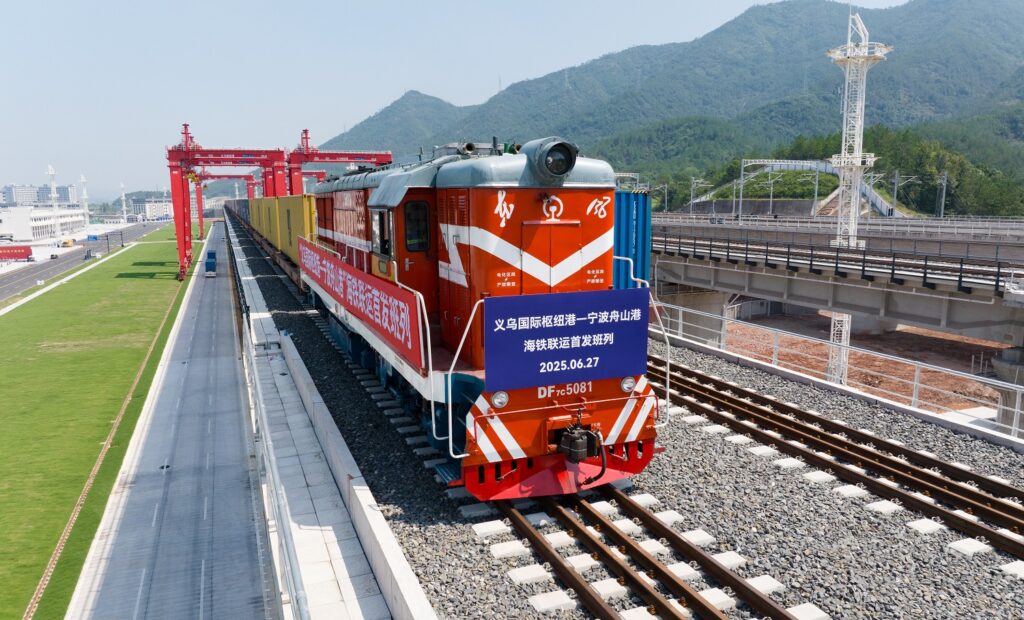
Zhao Jianmin, General Manager of Zhejiang Seaport Yiwu Hub Port Co., Ltd, emphasised the terminal’s role in establishing a logistics corridor between Yiwu and Ningbo-Zhoushan Port. The system allows for “one-time declaration, inspection, and release,” enabling cargo processed at Suxi to be treated as if it had already reached the seaport.
“This significantly reduces transit times and logistics costs,” Mr. Zhao said. “It’s a game-changer for inland connectivity and intermodal efficiency.”
A Step Toward Smarter, Greener Logistics
Aligned with national goals to build an intelligent, low-carbon, and fully integrated transport system, the launch reflects China’s continued investment in smart logistics infrastructure. By combining digitalisation, automation, and green energy goals, the Suxi terminal positions itself as a model for future logistics hubs across the country.
อัพเดตข่าวสารและบทความที่น่าสนใจในอุตสาหกรรมโลจิสติกส์ก่อนใคร ผ่าน Line Official Account @Logistics Mananger เพียงเพิ่มเราเป็นเพื่อน @Logistics Manager หรือคลิกที่นี่