



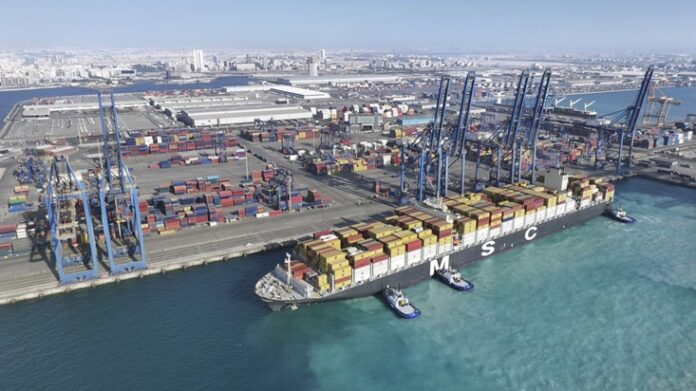
Mediterranean Shipping Company (MSC) has announced the introduction of its new Europe–Red Sea–Middle East Express service. The container service loop is engineered to address expanding cargo demands from Northern Europe and the Mediterranean while establishing a reliable transportation network amid ongoing maritime transit challenges across the Middle East.
The dedicated rotation connects core European industrial gateways directly with major consumer and transshipment hubs along the Red Sea and the Arabian Gulf, optimizing regional supply chain resilience.
Strategic Eastbound Transit Routing and Operational Commencements
The express service relies on MSC’s established feeder and inland infrastructure to handle various cargo categories, including refrigerated food products, automotive components, and industrial machinery.
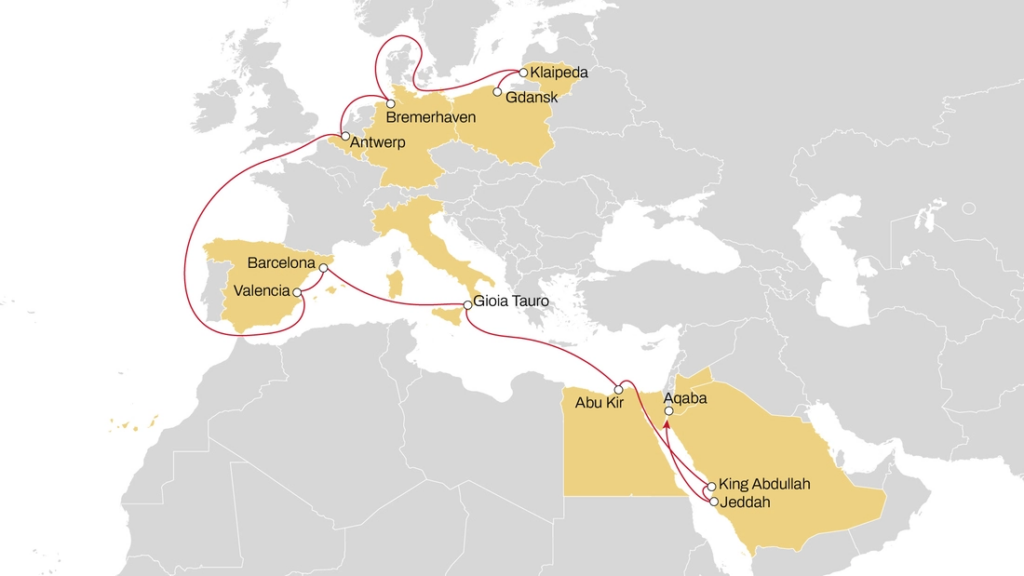
The formal Eastbound port rotation follows a highly structured, fixed corridor:
Eastbound Rotation: Gdansk – Klaipeda – Bremerhaven – Antwerp – Valencia – Barcelona – Gioia Tauro – Abu Kir – King Abdullah – Jeddah – Aqaba
The inaugural maritime deployment is scheduled to commence with the vessel departure from the Port of Antwerp, maintaining an Estimated Time of Sailing (ETS) of 10 May 2026 under voyage reference OC619 A.
Capillary Network Integration and Multimodal Extensions
By anchoring calls at strategic maritime hubs—including King Abdullah Port and the Port of Jeddah in Saudi Arabia alongside the Port of Aqaba in Jordan—MSC improves port-to-port transit times across the Levant and Red Sea markets.
To ensure comprehensive territorial coverage, the carrier links its main line calls to its broader capillary shipping network. This allows cargo originating from diverse European regions—including Northwest Europe, the Scandinavia-Baltic corridor, the West Mediterranean, the Adriatic, and the East Mediterranean-Black Sea sectors—to seamlessly feed into the express rotation via coordinated transshipment loops.
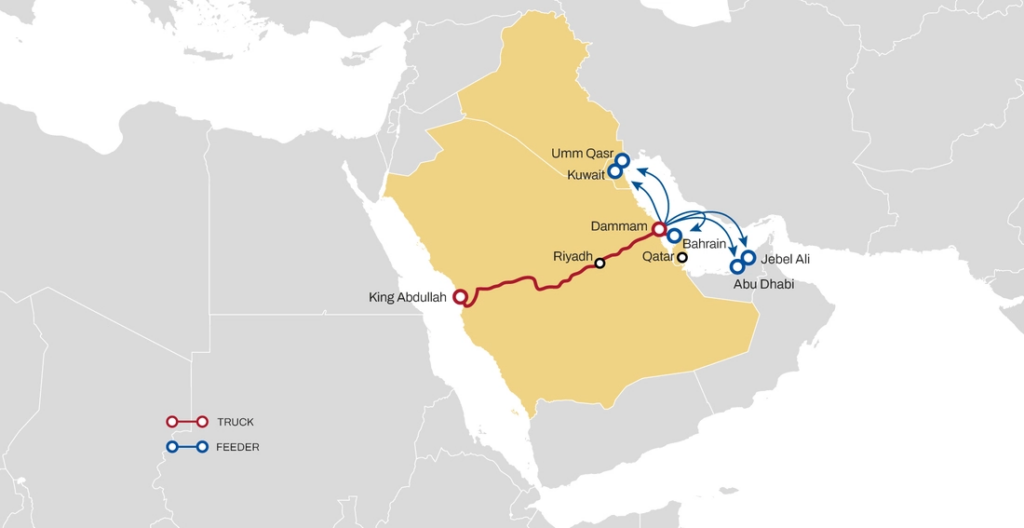
Furthermore, MSC utilizes its integrated domestic multimodal networks to extend cargo delivery beyond the primary ports of discharge. Shippers can access onward cross-border transport options into inland Arabian Gulf markets, securing reliable supply chain connectivity into the United Arab Emirates and Upper Gulf commercial sectors.
อัพเดตข่าวสารและบทความที่น่าสนใจในอุตสาหกรรมโลจิสติกส์ก่อนใคร ผ่าน Line Official Account @Logistics Mananger เพียงเพิ่มเราเป็นเพื่อน @Logistics Manager หรือคลิกที่นี่