

As sustainability becomes an increasingly important consideration across global supply chains, the logistics and transportation sector is facing growing pressure to reduce greenhouse gas emissions while maintaining cost efficiency, reliability and service quality. For logistics providers, the transition towards lower-carbon operations is therefore becoming both an environmental responsibility and a competitive requirement.
In Thailand, Kingcross Logistics, an end-to-end cross-border logistics provider, is among the SMEs demonstrating that progress towards low-carbon logistics can begin with practical improvements to existing operations rather than large-scale investment alone.
The company’s progress has been supported through its participation in the ECO Move green transport promotion initiative under the FY2026 Green Productivity Industrial Development Activity, part of the SME business upgrading project through the application of the BCG Economic Model. The initiative is led by the Division of Logistics, Department of Industrial Promotion (DIPROM), in collaboration with the Center for Sustainable Logistics & Supply Chain Management, Faculty of Environmental Management, Prince of Songkla University.
LM had the opportunity to speak with Ms. Warunya Pimsa-ard and Mr. Samatthapol Punyaisawa, Managing Directors of Kingcross Logistics, together with Ms. Areena Alee, Sustainability Team Leader. LM also spoke with Associate Professor Dr. Janya Chanchaichujit, Director of the Center for Sustainable Logistics & Supply Chain Management, Faculty of Environmental Management, Prince of Songkla University, and Vice Chairman of the Logistics Infrastructure and Supply Chain Subcommittee, ASEAN and Logistics Division, The Federation of Thai Industries (FTI), who has played a key role in guiding participating SMEs through the ECO Move project.
The Journey to Advancing Green Logistics and Logistics Decarbonization
Associate Professor Dr. Janya’s work in green logistics is grounded in direct industry experience. Before entering academia, she worked as a logistics executive responsible for production planning, warehousing, transportation and distribution systems, providing an important foundation for her later work as a lecturer and researcher.

She subsequently researched Green Supply Chain Management across industries including rubber, textiles and e-commerce, before expanding into international research through collaboration with the Mekong Institute and UNESCAP on Green Logistics and Sustainable Transport Corridor initiatives.
As climate change gained greater global attention and Thailand announced its net zero emissions target, Associate Professor Dr. Janya applied her experience to the development of a logistics decarbonisation framework. Supported by the Program Management Unit for Competitiveness (PMUC), the framework helps companies systematically reduce greenhouse gas emissions while improving operational efficiency.
Her work has included a Net Zero Execution Roadmap for the postal, parcel and e-commerce sectors in collaboration with Thailand Post, followed by work with SCGJWD Logistics on a logistics decarbonisation plan for freight transport. This included applying the GLEC Framework and ISO 14083 to measure and report supply chain emissions in line with international standards, alongside carbon reduction targets and low-carbon solutions.
She also collaborates with the Smart Freight Centre (SFC) in the Netherlands to support international standards and decarbonisation capabilities in Thailand, while working with Logistics Academy by SCGJWD Academy, FTI and the Thailand Climate Business Network (ThaiCBN) on training, knowledge transfer and cross-sector collaboration.
With SMEs accounting for a significant proportion of Thailand’s logistics industry, the challenge is ensuring that smaller operators can access practical guidance without creating an unsustainable financial burden. This objective led Associate Professor Dr. Janya to work with DIPROM on ECO Move, adapting the logistics decarbonisation framework into tools and practices suited to SME operators. Kingcross Logistics became one of the project’s model organisations.
ECO Move Advances Sustainable Logistics in Thailand
A major barrier identified by the ECO Move project was the perception among some SMEs that moving towards low-carbon logistics would require substantial capital investment, such as replacing an existing fleet with electric vehicles. The ECO Move approach instead begins with operational efficiency, waste reduction and solutions suited to each company’s circumstances, with larger technology investments introduced progressively when the business is ready.
“The heart of the ECO Move project is showing entrepreneurs that carbon reduction, cost reduction and greater competitiveness can be achieved at the same time,” Associate Professor Dr. Janya explained. “We want to give SMEs confidence that the transition to low-carbon logistics does not require a large upfront investment. Companies can begin by optimising their existing operations and progress according to their own capabilities, supporting sustainable growth and competitiveness in a business environment that increasingly values carbon reduction.”
Leading SME in Low-Carbon Cross Border Logistics

As a cross-border transport service provider, Kingcross Logistics operates amid rising energy costs, increasingly demanding international environmental requirements and growing customer expectations surrounding supply chain sustainability. The company therefore began exploring ways to reduce operating costs and emissions while preparing for the longer-term transition towards a low-carbon economy.
“We see the ECO Move project as an important platform that brings together different sectors around the shared objective of reducing emissions across the supply chain,” said Ms. Warunya. “Businesses, government agencies, academia and specialists can share information and develop long-term solutions aligned with each company’s objectives. We were confident in joining the project, with Associate Professor Dr. Janya acting as an adviser and helping us develop operational standards and identify solutions suited to our workflow.”
Under the initiative, expert teams visited Kingcross sites to collect and analyze operational data before assessing the company’s capabilities using the LSP Score Card and ILPI tools. The process identified two areas with particularly strong potential for improvement: tire management and backhaul matching.
- Tire Management
For tire management, Kingcross introduced more systematic tire-pressure monitoring using specialized equipment and expert support, together with preventive maintenance, driver training and tracking dashboards. These measures were designed to improve fuel efficiency and safety, reduce tire wear and extend tire lifespan, creating direct cost savings.

- Backhaul Matching System
The second focus was reducing empty return journeys through a backhaul matching system. By matching return capacity with additional cargo, Kingcross improved transport efficiency, reduced unnecessary mileage and lowered the environmental impact associated with empty truck movements.
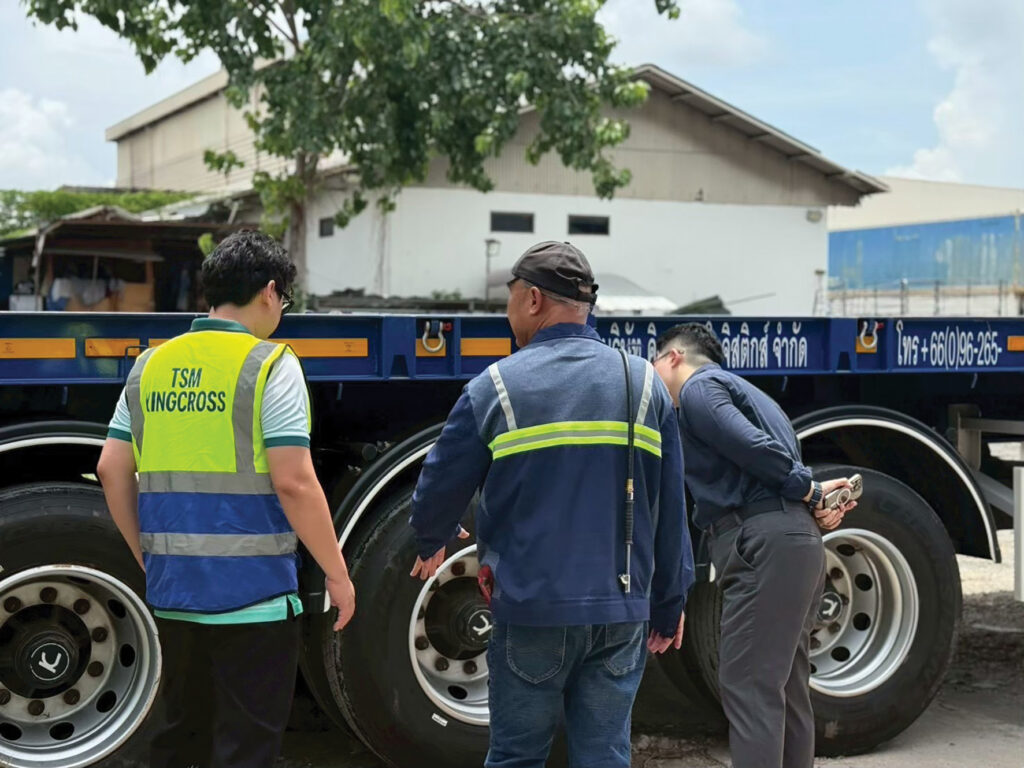

“Long-distance freight routes, particularly cross-border movements, frequently face the problem of empty backhauls, which creates hidden financial costs as well as unnecessary environmental impact,” said Mr. Samatthapol. “Through the project, we developed a backhaul matching system that turns empty journeys into business opportunities. This has helped us reduce the number of empty trucks on the road, improve fleet utilization and achieve a meaningful reduction in supply chain emissions.”
Delivering Measurable Impact and Results
According to the project results, Kingcross achieved a 13.47 percent reduction in greenhouse gas emissions and a 12.71 percent reduction in transportation energy costs. The improvements also contributed to an annual increase of THB 1.29 million in total operating revenue and annual economic value of THB 1.53 million.

For Kingcross, these results demonstrate that company size does not have to be a barrier to implementing lower-carbon logistics. Businesses can instead identify inefficiencies within existing operations and introduce incremental improvements that support cost efficiency, operational performance and environmental objectives.
“As the younger generation, we believe sustainability is everyone’s responsibility and that it can begin with simple actions in everyday operations,” said Ms. Areena. “Participating in the ECO Move project showed us that decisions about route planning and resource allocation can create a meaningful positive impact for the company, the environment and society. More important than receiving recognition is the opportunity to learn new approaches that can be applied in practice. We believe good logistics is not only about delivering goods, but also about creating value for society and the environment along the way.”
Building on Success to Shape the Future
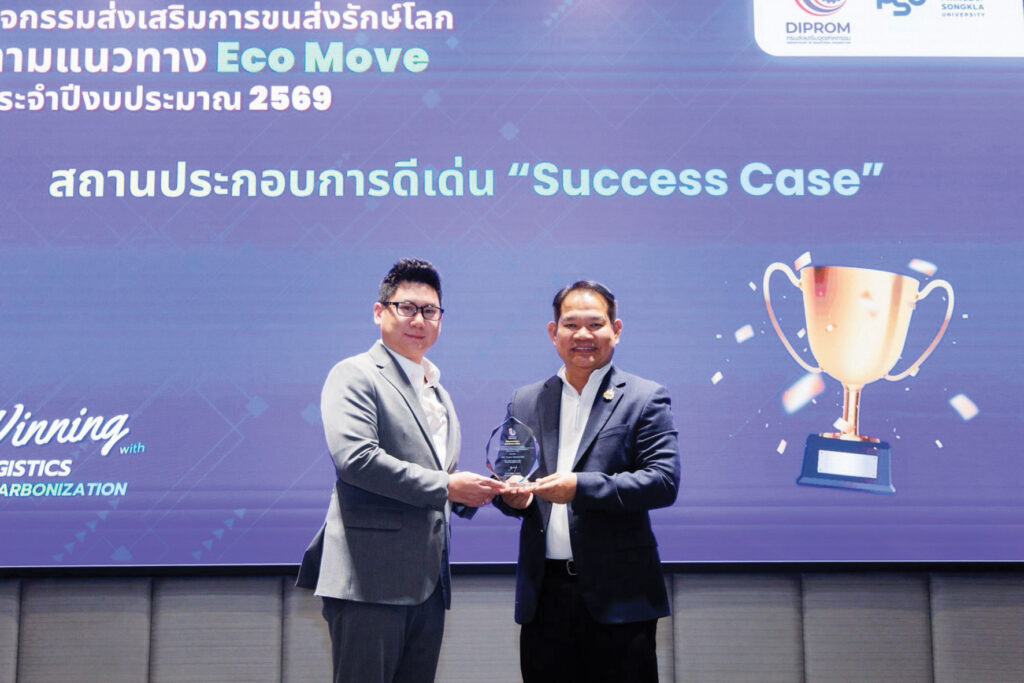
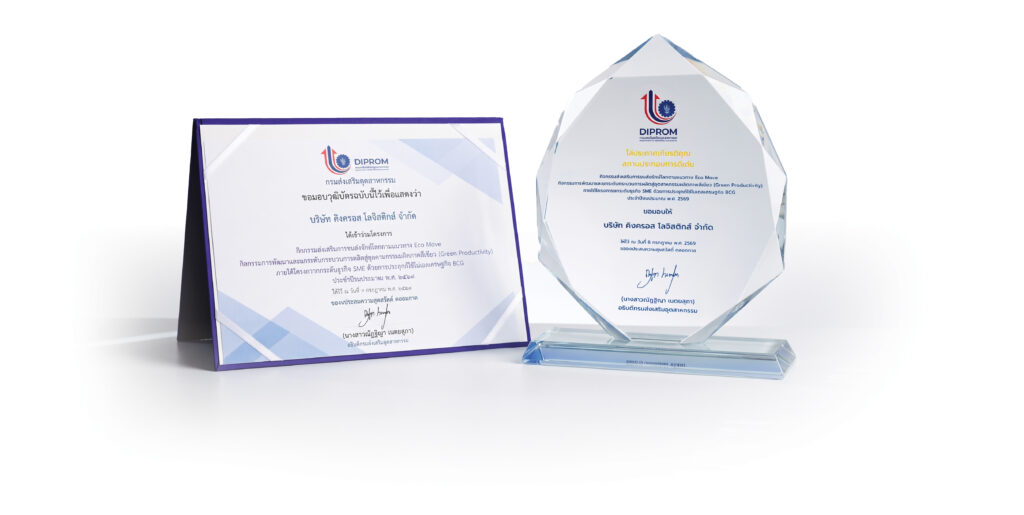
Kingcross Logistics was recognised by DIPROM as an Outstanding Company and presented as a Model for Low-Carbon SME Logistics Success Case. The Thailand Greenhouse Gas Management Organization also certified the company’s Corporate Carbon Footprint (CFO).
These achievements support Kingcross’ preparations for future logistics emissions reporting in accordance with ISO 14083 and reinforce its sustainability capabilities as environmental performance becomes increasingly relevant to international customers and global trade requirements.
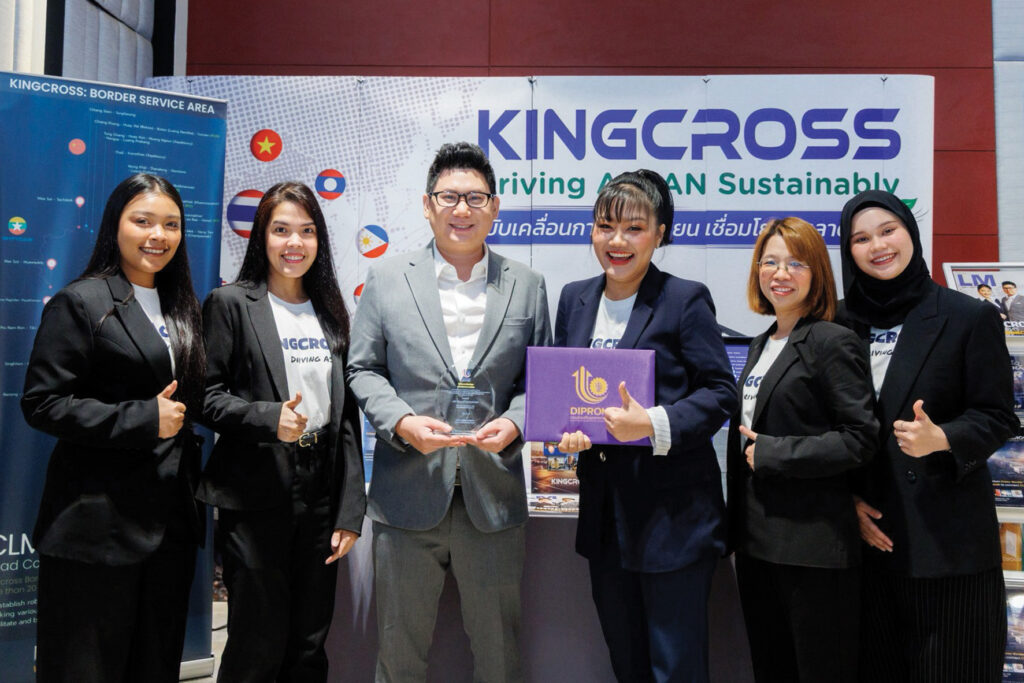
“For Kingcross, a sustainable supply chain is no longer simply about competing on cost, price and speed. Sustainability has become an important strategy for strengthening competitiveness and opening opportunities to provide solutions for international partners,” said Ms. Warunya. “Kingcross is preparing to respond to evolving global trade requirements across technology, safety and environmental performance. We will continue developing the business towards becoming an end-to-end multimodal transport specialist, supported by further digitalisation and sustainability.”
Kingcross Logistics’ experience through ECO Move demonstrates that the transition towards low-carbon logistics can begin with practical changes to existing transport operations. By building on improvements in route optimisation, reduced empty running and tyre management, the company aims to strengthen its capabilities as a regional logistics provider while contributing to a more efficient and sustainable Thai logistics industry.
อัพเดตข่าวสารและบทความที่น่าสนใจในอุตสาหกรรมโลจิสติกส์ก่อนใคร ผ่าน Line Official Account @Logistics Mananger เพียงเพิ่มเราเป็นเพื่อน @Logistics Manager หรือคลิกที่นี่