

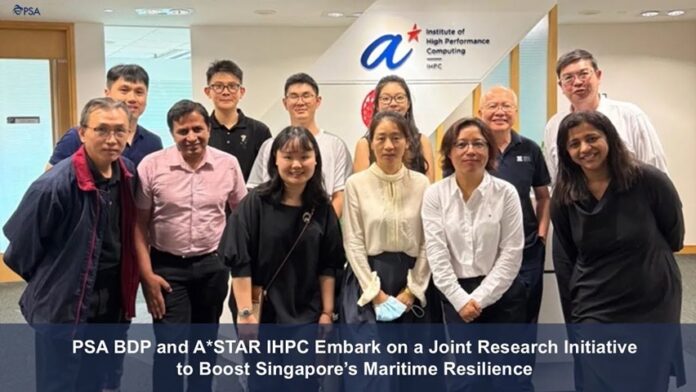
PSA BDP, a leading global logistics and supply chain solutions provider, and A*STAR Institute of High Performance Computing (A*STAR IHPC), Singapore’s public-sector R&D agency, have launched a three-year joint research initiative to bolster the resilience of global supply chains and Singapore’s position as a robust maritime hub.
The collaboration, titled “AI-based Event Mining and Impact Evaluation of Maritime Shipping Disruptions,” combines PSA BDP’s extensive global logistics expertise with A*STAR IHPC’s capabilities in advanced Artificial Intelligence (AI), modelling, and simulation.
Key Goals and AI Application
The primary objective of the initiative is to apply advanced computational techniques to real-world maritime challenges arising from factors like port congestion, regulatory shifts, and climate events.
The AI model aims to achieve three critical functions:
- Detect Disruption: Identify potential disruptions within the global shipping network earlier than traditional methods.
- Assess Downstream Impact: Evaluate the cascading effects of a disruption on shipping operations, cargo flow, and supply chain continuity.
- Propose Mitigation Strategies: Suggest potential risk mitigation and alternative scenarios to shippers and port operators.
This work is part of Phase 2 of the Maritime AI Research Programme, supported by the Singapore Maritime Institute (SMI) and the Maritime and Port Authority of Singapore (MPA).
Data Sources and Technology
The system relies on integrating and analyzing multiple data types:
- Maritime Data (Structured): The model draws on data sources like the Automatic Identification System (AIS), which provides real-time information on a vessel’s position, course, speed, and other dynamic data . This data is used to provide clearer insights into terminal capacity and utilization, helping anticipate disruption risks.
- Unstructured Data (LLMs): The project will explore the use of Large Language Models (LLMs) to analyze unstructured information, such as news reports or regulatory updates, which often signal potential disruptions not yet visible in physical movement data.
By combining simulation with these AI-driven insights, the project aims to help stakeholders, including Beneficial Cargo Owners and PSA terminals, make faster, more informed decisions. The AI model will be tested and validated in Singapore, one of the world’s busiest transshipment hubs, before potential expansion to other global commercial markets.
อัพเดตข่าวสารและบทความที่น่าสนใจในอุตสาหกรรมโลจิสติกส์ก่อนใคร ผ่าน Line Official Account @Logistics Mananger เพียงเพิ่มเราเป็นเพื่อน @Logistics Manager หรือคลิกที่นี่