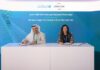

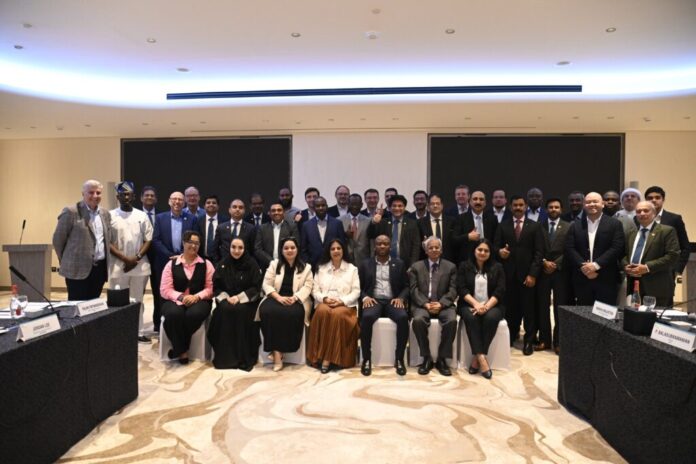
Kale Logistics Solutions (Kale) hosted a milestone event in Dubai last week, drawing over 50 high-level stakeholders from the maritime and air cargo sectors across more than 20 countries. Held from 12 to 14 September, the CLEAR VIEW and VANTAGE POINT summits marked a renewed call for multimodal collaboration in the face of mounting industry-wide pressures.
The two-day programme followed a distinctive structure: Day 1 offered separate thematic tracks for air cargo and maritime logistics, while Day 2 brought both sectors together to address shared concerns and explore cross-modal solutions.
Key Themes: Smart Ports, Collaboration, and Sustainability
Discussions centred on forward-looking topics such as Air Cargo 2030, reimagining seaports in light of evolving infrastructure and policy demands, the ascent of smart terminal ecosystems, and the transformative influence of e-commerce on traditional supply chains.
A consistent theme emerged across both tracks: logistics hubs are increasingly defined not by basic connectivity, but by their ability to deliver customer-facing, multimodal value. Delegates agreed that the next phase of competitiveness for ports and airports lies in digitalisation, agility, and integrated systems.
“Sustainability” was identified as the most urgent cross-sector issue. Participants highlighted the risks of siloed initiatives and called for unified strategies underpinned by real-time data, operational efficiency, and transparent reporting. There was a clear consensus that only through shared responsibility and collaboration can the industry meet decarbonisation targets and ESG expectations.
Airports and Ports Must Collaborate, Not Compete
Vineet Malhotra, Chief Executive Officer and Founder of Kale Logistics, underscored the event’s goal of bridging modal divides:
“Our aim with combining the two tracks of our summit was to create a multimodal space for us to discuss the issues that affect the entire industry,” said Mr. Malhotra.
The summit also sparked dialogue around a shifting competitive landscape. Where seaports and airports were once considered parallel players, many now believe true resilience depends on intermodal coordination, not operational isolation.
“Ports and airports can no longer afford to act in isolation, because the challenges we face, whether cutting emissions, improving resilience, or adapting to new trade patterns, require a collective response,” Mr. Malhotra added. “The summit showed there is real appetite for collaboration, and technology will be the enabler of the changes we need.”
Next Steps: Research and Roadmaps
In response to the positive momentum generated during the summit, Kale confirmed plans to publish a formal research paper capturing the key insights from the event. The paper will outline recommendations on three primary fronts: sustainability, smart port development, and multimodal logistics integration.
The event reinforced Kale’s position as a driving force in the digital transformation of the global logistics sector and demonstrated a growing industry appetite for joined-up thinking across traditionally siloed supply chain functions.
อัพเดตข่าวสารและบทความที่น่าสนใจในอุตสาหกรรมโลจิสติกส์ก่อนใคร ผ่าน Line Official Account @Logistics Mananger เพียงเพิ่มเราเป็นเพื่อน @Logistics Manager หรือคลิกที่นี่