
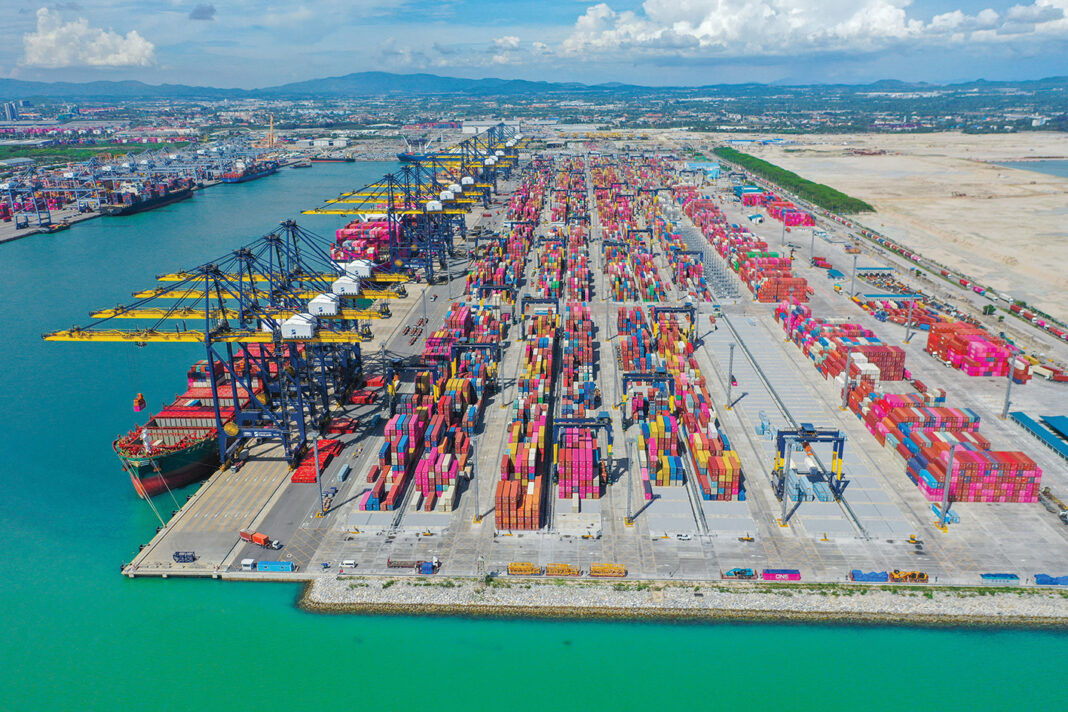
Maritime transport underpins global trade, and ports play a vital role in national and regional economies. Continued investment in infrastructure, technology, and people helps ports improve efficiency and support the movement of goods.
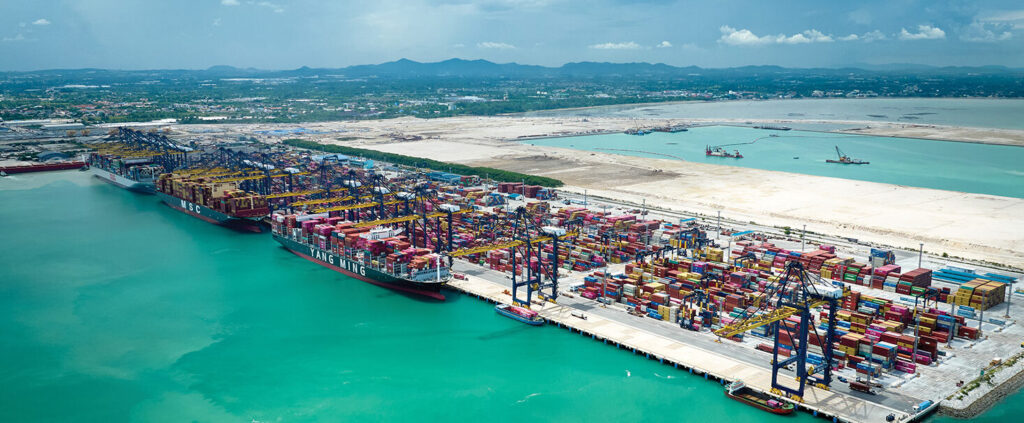
Laem Chabang Port is Thailand’s main gateway for international trade. Hutchison Ports Thailand’s Terminal D, the port’s most technologically advanced terminal, supports this role and contributes to the country’s economic growth.
On 26 November 2026, Hutchison Ports Thailand (HPT) will hold a ceremony at Laem Chabang Port to mark the completion and full operational capability of Terminal D. Logistics Manager looks at the terminal’s development and the technology it will bring to port operations.
The Development of Thailand’s Most Advanced Terminal
HPT began investing in Terminal D in 2016 as import and export volumes at Laem Chabang Port continued to grow. The investment also reflected Thailand’s potential as a regional logistics hub, supported by its strategic position for maritime and land transport.
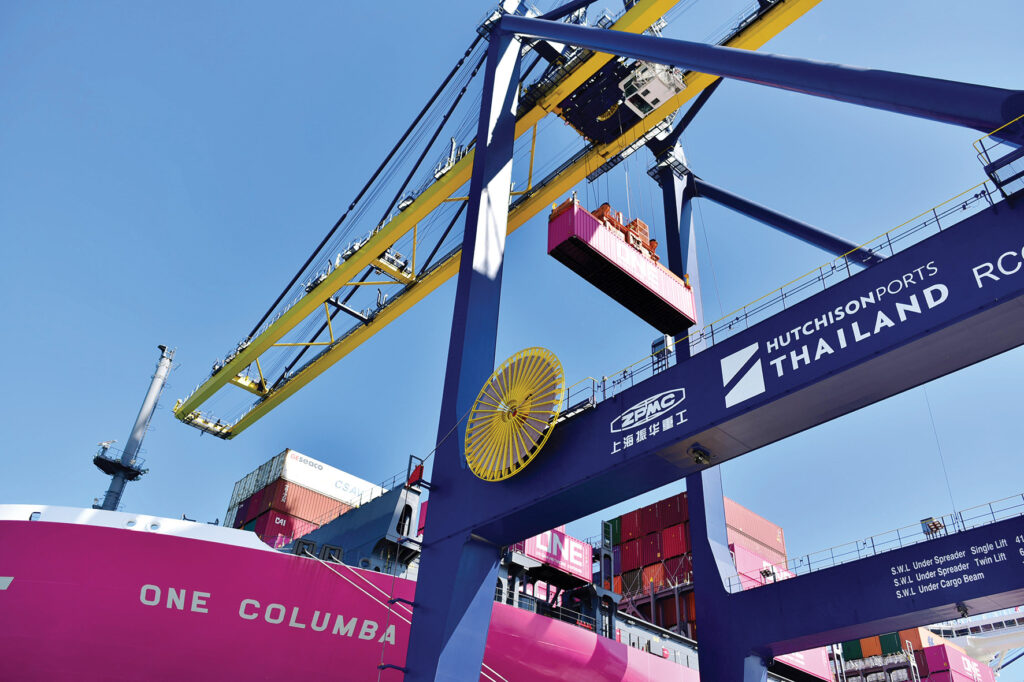
The company has invested THB 20 billion in the terminal’s construction. The development supports the Eastern Economic Corridor (EEC) initiative and aligns with the Hutchison Ports Group’s wider sustainability goals.
Construction began in 2016, and the terminal welcomed its first vessel in June 2018. Developed in phases, Terminal D is set to cover 770,000 square meters, with a 1,700-metre berth and a draft of 16 meters at mean sea level. At full operational capability, it will be able to accommodate three Super Post-Panamax vessels (more than 12,500 TEUs) and one feeder vessel at the same time, with an annual throughput capacity of 3.5 million TEUs. Its infrastructure is also designed to accommodate future increases in vessel size.
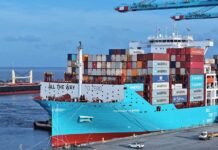
Terminal D has already welcomed mega vessels operated by leading shipping lines, including COSCO SHIPPING, OOCL, Ocean Network Express (ONE), Yang Ming, Hyundai, and Mediterranean Shipping Company (MSC).
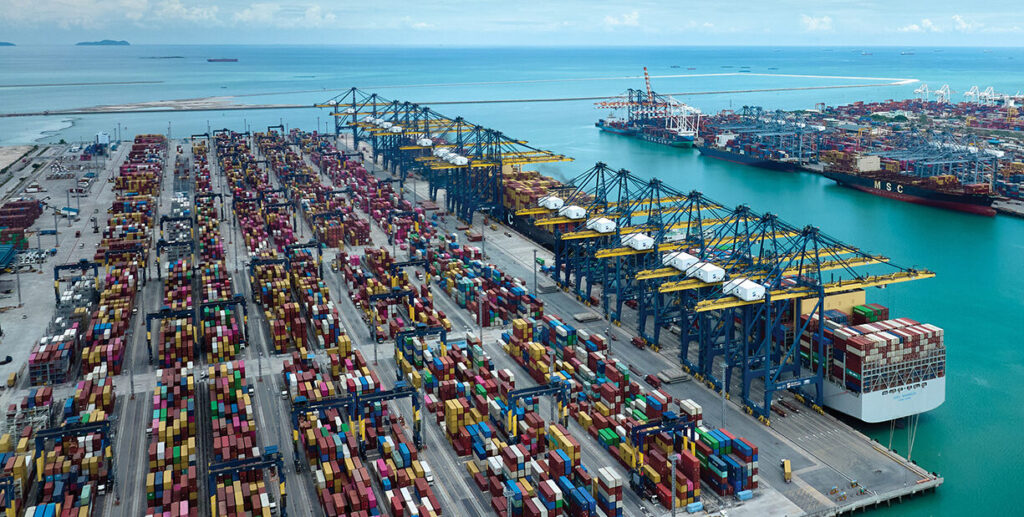
Designed for Advanced Operations
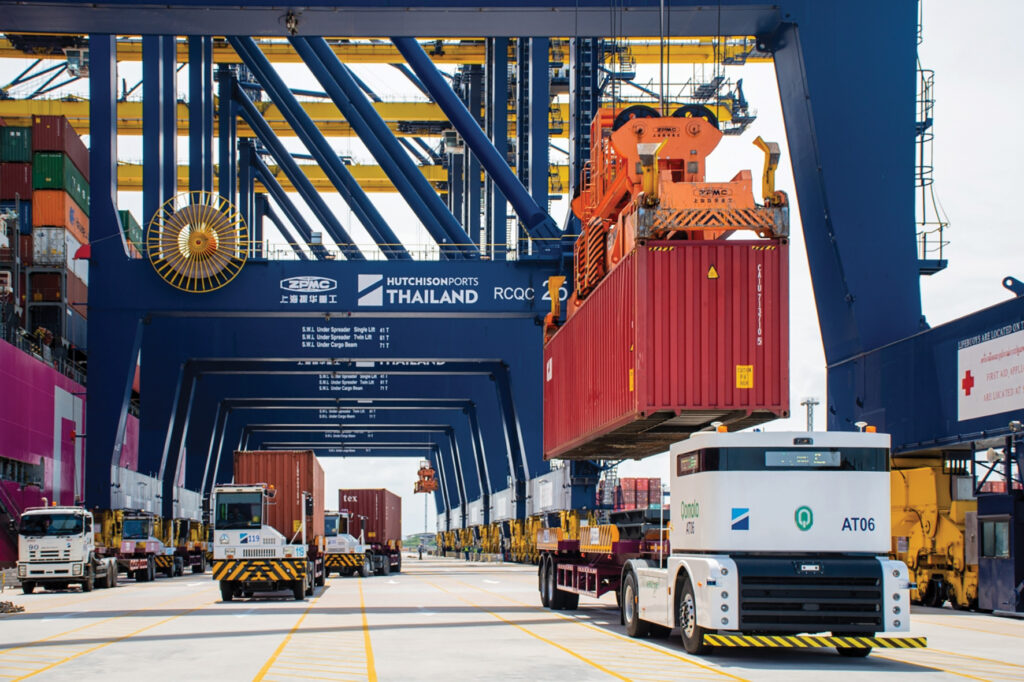
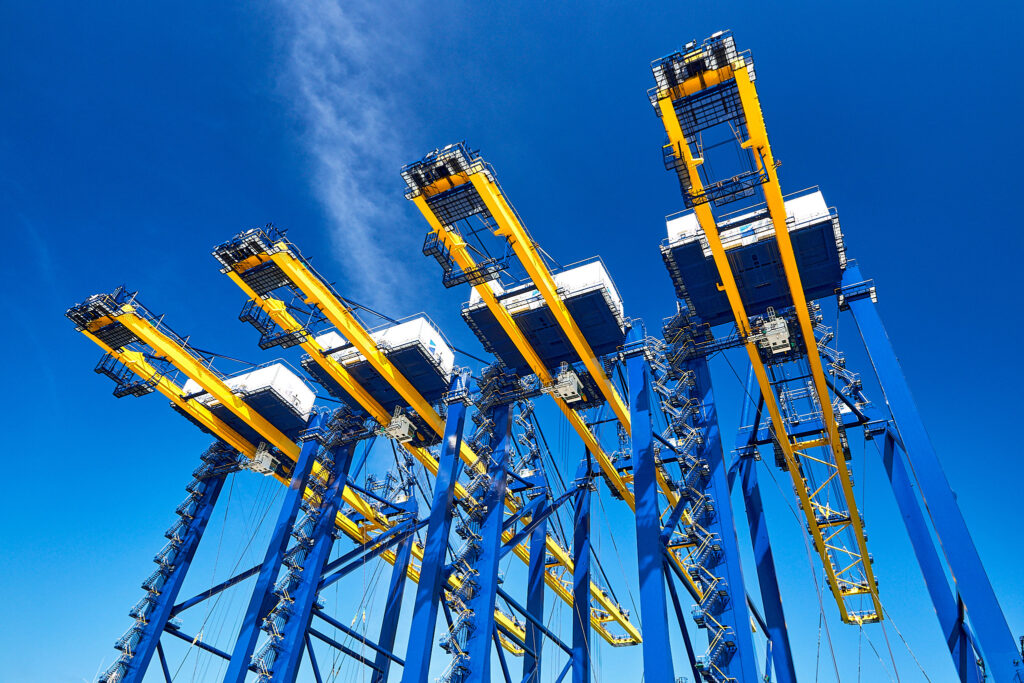
HPT pioneered the use of remote-controlled ship-to-shore and yard cranes in Thailand. At full operational capability, Terminal D will have 17 quay cranes, all operated from a central control room, and 43 remote-controlled yard cranes.
Remote operation represents a significant technological development and supports employee well-being. Instead of working in elevated crane cabins, operators will be able to control equipment from ergonomic workstations. This setup will support collaboration and help improve operational efficiency while maintaining safety.
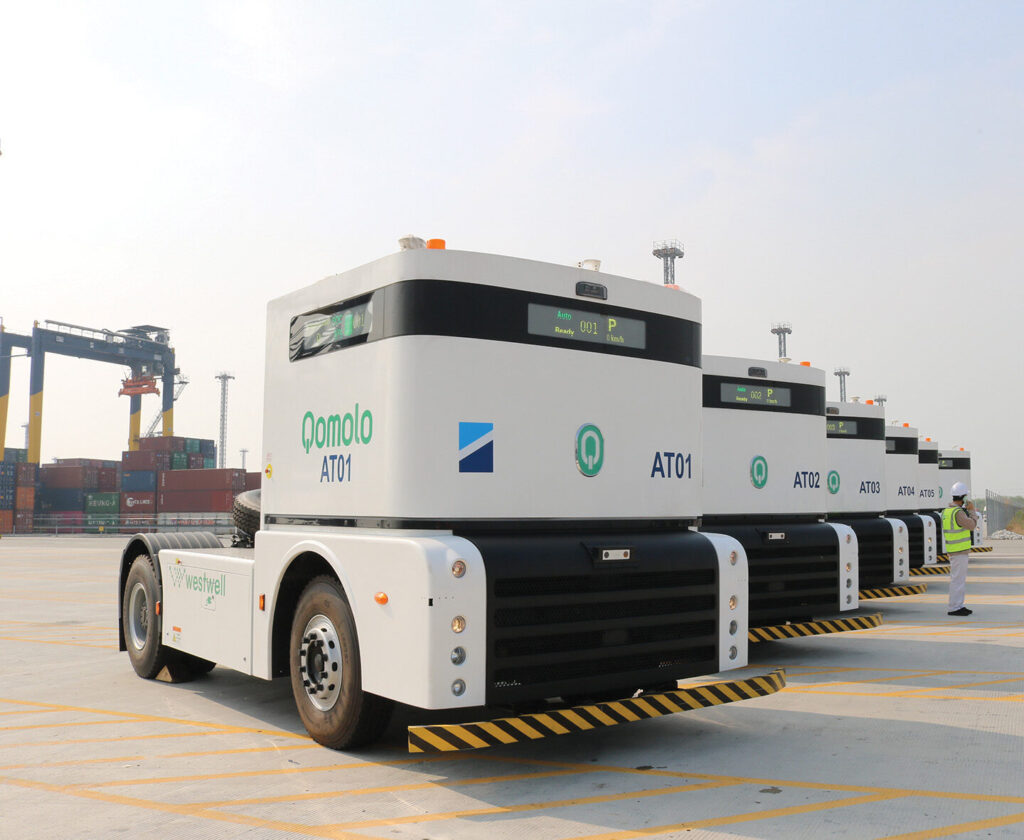
For internal container movements, Terminal D will use a fleet of autonomous trucks. Satellite navigation antennas, advanced sensors, and AI-powered cameras will help the vehicles analyze routes and detect obstacles. Electric trucks, supported by an automated battery-swapping station, will enable continuous operations around the clock without tailpipe emissions.
An automated gate system will digitize documentation to help reduce processing errors and congestion. It will also integrate with the UBI app, allowing users to track container movements, check vessel berthing schedules, and receive real-time container status notifications.
Driving Sustainability Across Terminal Operations
Maritime freight transport and port operations can contribute to air and noise pollution, affecting the environment, port personnel, and nearby communities. As part of its commitment to sustainability and its goal of reaching net-zero carbon emissions by 2050, HPT says nearly all equipment at Terminal D will be electrically powered. This will include cranes, terminal trucks, reach stackers, and empty container handlers.
A Benchmark for Smart Terminal Management
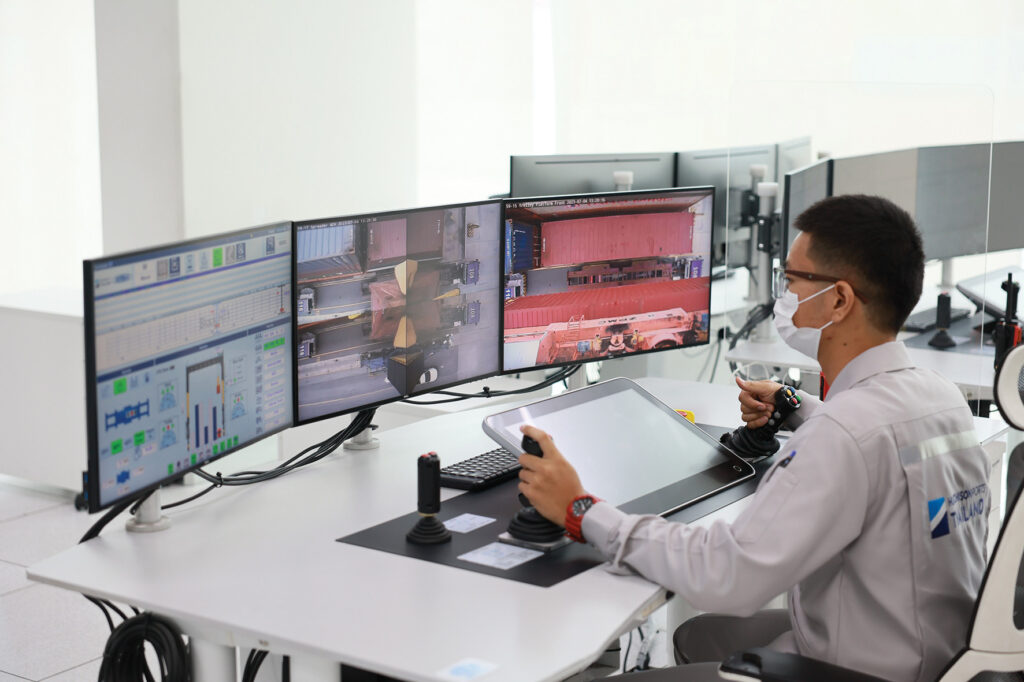
Terminal D is designed to combine operational performance with smart and sustainable port management. Its remote crane control center also serves as a visitors’ center, offering insight into port logistics, automation, and the terminal’s environmental initiatives.
The visitors’ center has regularly welcomed senior Thai officials and representatives visiting HPT’s operations. These have included officials from the Ministry of Transport, the Ministry of Commerce, the Ministry of Interior and the Ministry of Justices, along with senators, members of the House of Representatives, members of parliamentary committees, and the Port Authority of Thailand.
International visitors have included representatives from port authorities and terminal operators in the People’s Republic of China, the United Kingdom, the Netherlands, Pakistan, Egypt, Spain, Japan, Oman, Mexico, the Philippines, and Indonesia. The visitors’ centre has also hosted delegations from overseas government bodies, including Kunming municipal authorities in Yunnan Province, the French and Swiss embassies, and the Lao People’s Democratic Republic.
Among its distinguished visitors was Her Royal Highness Princess Maha Chakri Sirindhorn, accompanied by senior government officials and cadets from the Chulachomklao Royal Military Academy.
With Terminal D’s completion and full operational capability to be marked on 26 November, HPT is preparing to bring its infrastructure, digital capabilities, and technology together in a flagship facility. The terminal is expected to support Thailand’s logistics sector and economic growth, while contributing to a more sustainable, technology-led maritime industry in the region.
อัพเดตข่าวสารและบทความที่น่าสนใจในอุตสาหกรรมโลจิสติกส์ก่อนใคร ผ่าน Line Official Account @Logistics Mananger เพียงเพิ่มเราเป็นเพื่อน @Logistics Manager หรือคลิกที่นี่