

New 4,500 TEU Vessels to Cut CO2 Emissions by 350,000 Tonnes Annually
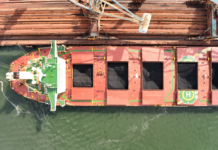
Hapag-Lloyd has finalized a contract with Chinese shipyard CIMC Raffles for the construction of eight state-of-the-art container ships, marking the carrier’s first newbuild order featuring dual-fuel methanol propulsion. With an investment exceeding $500 million, the 4,500 TEU vessels are scheduled for delivery between 2028 and 2029.
The new vessels are engineered to be 30% more efficient than existing ships in the same class. When operating on green methanol, the fleet is projected to save up to 350,000 metric tons of CO2e per year, significantly advancing Hapag-Lloyd’s progress toward its Strategy 2030 climate targets.
Expanding the Green Multi-Fuel Fleet
This order is a cornerstone of Hapag-Lloyd’s diversified propulsion strategy, which already includes 37 dual-fuel LNG vessels capable of running on biomethane. The transition to methanol is supported by several strategic milestones:
- Retrofit Program: In April 2024, Hapag-Lloyd partnered with Seaspan Corporation to convert five 10,100 TEU ships to methanol propulsion by 2027.
- Fuel Security: A 2024 agreement with Goldwind secures 250,000 metric tons of green methanol annually—a blend of bio- and e-methanol that reduces lifecycle emissions by at least 70%.
- Feeder Fleet Modernization: Beyond the newbuilds, the company will charter an additional 14 vessels (ranging from 1,800 to 4,500 TEU) on a long-term basis to modernize its regional feeder networks.
Commitment to Strategy 2030 and Net Zero
The investment in the sub-5,000 TEU segment is designed to replace aging tonnage and reduce reliance on the volatile charter market. Rolf Habben Jansen, CEO of Hapag-Lloyd, noted that these ships are central to achieving a one-third reduction in absolute greenhouse gas emissions by 2030 (relative to 2022).
By integrating these highly efficient ships into the Gemini Cooperation hub-and-spoke network, Hapag-Lloyd aims to offer more sustainable “Ship Green” solutions to its customers. The company remains on a strict trajectory to achieve net-zero fleet operations by 2045, five years ahead of the broader industry’s initial targets.
อัพเดตข่าวสารและบทความที่น่าสนใจในอุตสาหกรรมโลจิสติกส์ก่อนใคร ผ่าน Line Official Account @Logistics Mananger เพียงเพิ่มเราเป็นเพื่อน @Logistics Manager หรือคลิกที่นี่