

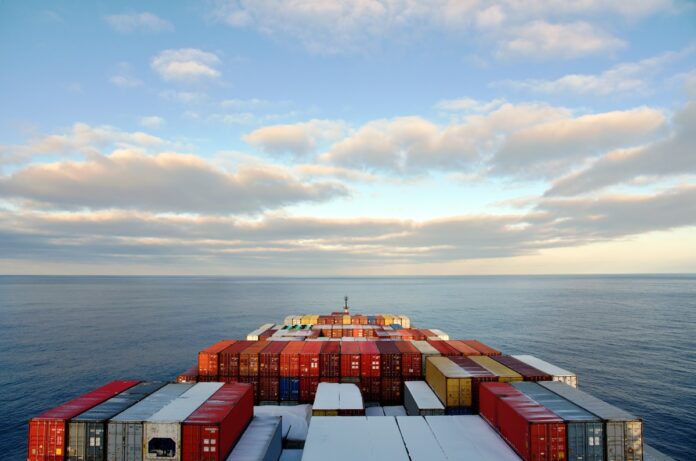
Hapag-Lloyd and DSV have significantly expanded their environmental partnership by signing a two-year Ship Green framework agreement. Under this new contract, DSV has committed to purchasing 18,000 tonnes of CO₂e (carbon dioxide equivalent) emission reductions, marking a major milestone in the push for net-zero ocean freight.
The collaboration, which traces back to a successful 2022 pilot, utilizes second-generation biofuels produced from waste and residue-based feedstocks to drive tangible progress in global supply chain decarbonisation.
Accelerating Green Shipping via “Book-and-Claim”
The agreement leverages a book-and-claim chain-of-custody mechanism. This innovative model allows DSV to claim verified emission reductions even if the sustainable fuel is not physically used on the specific vessel carrying their cargo.
How the Mechanism Works:
- Physical Use: Hapag-Lloyd utilizes second-generation biofuels across its owned and operated global fleet.
- Verification: The emissions avoided by using these biofuels instead of conventional fossil marine fuel oil (MFO) are strictly verified.
- Allocation: These verified “green credits” are then allocated to DSV, enabling them to offer carbon-reduced shipping solutions to their own customers regardless of the specific trade route.
This approach is critical in 2026 as sustainable marine fuels remain limited in total global supply. By decoupling the environmental benefit from the physical fuel, the industry can scale climate action more rapidly.
A Future-Ready Multi-Fuel Approach
While the current focus is on second-generation biofuels, the agreement is the first of its kind to allow for the inclusion of other sustainable fuel sources as they become commercially viable. This includes biomethane, which Hapag-Lloyd integrated into its portfolio in 2024, and potentially synthetic e-fuels in the future.
Danny Smolders, Managing Director Global Sales at Hapag-Lloyd, stated: “By working closely together, we can turn ambition into action. This agreement demonstrates how carriers and forwarders can jointly drive meaningful progress.”
Shared Commitment to Net-Zero
The partnership aligns with the aggressive climate roadmaps of both organizations:
- Hapag-Lloyd: Aiming for net-zero fleet operations by 2045.
- DSV: Committed to reaching net-zero emissions across its entire value chain by 2050.
Michael Hollstein, Head of Ocean Product at DSV, noted that sustainable marine fuels represent a “tangible and scalable solution” during this crucial phase of the green transition. By utilizing waste-based feedstocks, the partnership ensures that fuel production does not compete with food crops, maintaining high standards for ecological sustainability.
อัพเดตข่าวสารและบทความที่น่าสนใจในอุตสาหกรรมโลจิสติกส์ก่อนใคร ผ่าน Line Official Account @Logistics Mananger เพียงเพิ่มเราเป็นเพื่อน @Logistics Manager หรือคลิกที่นี่