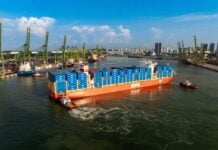
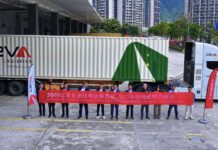
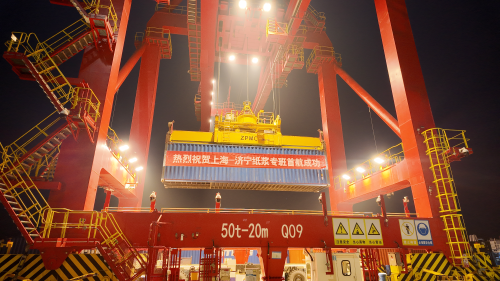
COSCO SHIPPING Specialized Carriers has successfully completed a landmark “ocean + inland river” full-chain transportation project, delivering Brazilian pulp directly to the manufacturing heart of Western Shandong. This operation marks the debut of the “bulk-to-container” dedicated service on the Shanghai-Jining route, creating a new sustainable paradigm for importing bulk commodities into China’s interior.
The project demonstrates a seamless integration of cross-border maritime shipping with green domestic waterway transit, significantly reducing both carbon emissions and logistical overhead.
The Full-Chain Logistics Flow
The journey from South American production sites to Chinese factories was executed through a high-precision, multi-stage process designed to minimize cargo handling and environmental impact.
- Ocean Leg: The vessel M.V. CSPC GEMINI transported the bulk pulp across the ocean, docking at Shanghai’s Luojing Terminal.
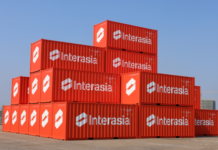
- The “Bulk-to-Container” Pivot: Upon unloading, the pulp was immediately containerized within the terminal. This “bulk-to-container” transition is a strategic move to reduce cargo loss rates and simplify the transshipment process.
- Green Inland Transit: The containers were loaded onto the Jining Port & Shipping 9001, an LNG-powered new energy vessel.
- The Grand Canal Route: The vessel sailed directly along the historic Beijing-Hangzhou Grand Canal for seven days, arriving at Jining Port for final delivery to the customer’s factory.
Efficiency and Sustainability Benchmarks
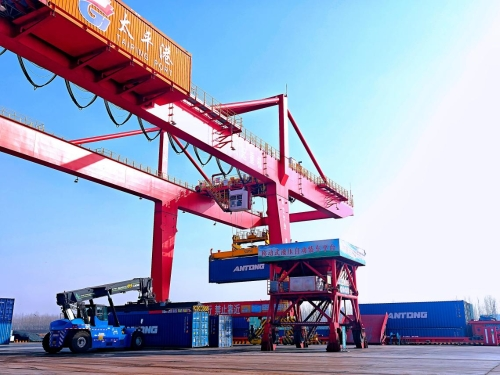
This integrated solution provides a more stable raw material supply chain for the manufacturing industry in southwestern Shandong Province while achieving industry-leading efficiency gains:
- Carbon Reduction: The use of LNG-powered vessels for the inland waterway segment achieved a carbon emission reduction of over 30% compared to traditional fuel-powered ships.
- Increased Efficiency: Overall transportation efficiency improved by 15% over conventional methods, largely due to the seamless connection between unloading and containerization at the Luojing Terminal.
- Cost Optimization: By adopting the containerized model for the final leg, COSCO significantly reduced comprehensive logistics costs and physical cargo damage.
A New Model for Inland Manufacturing
As China continues to emphasize green development, the success of the Shanghai-Jining “Green Corridor” serves as a blueprint for other inland manufacturing hubs. By leveraging the extensive network of the Grand Canal and combining it with new energy shipping technology, COSCO is providing a low-carbon guarantee for the supply chains of high-volume industries like paper and textile manufacturing.
This project reinforces COSCO SHIPPING’s commitment to “full-chain” excellence, ensuring that the benefits of global maritime trade extend far beyond coastal ports to reach the deep interior of the Chinese market.
อัพเดตข่าวสารและบทความที่น่าสนใจในอุตสาหกรรมโลจิสติกส์ก่อนใคร ผ่าน Line Official Account @Logistics Mananger เพียงเพิ่มเราเป็นเพื่อน @Logistics Manager หรือคลิกที่นี่