
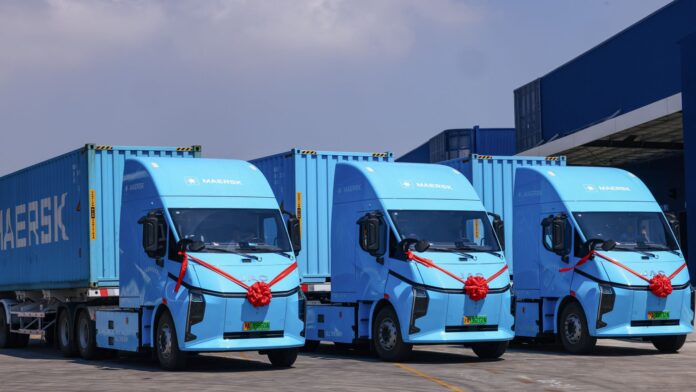
Integrated logistics provider A.P. Moller – Maersk has officially deployed its first fleet of new-energy electric heavy-duty container trucks at its Lin-gang Flagship Logistics Centre in Shanghai. The deployment replaces traditional diesel-powered drayage equipment with a zero-emission transport framework, establishing a low-carbon corridor over the critical inland links of the regional container supply chain.
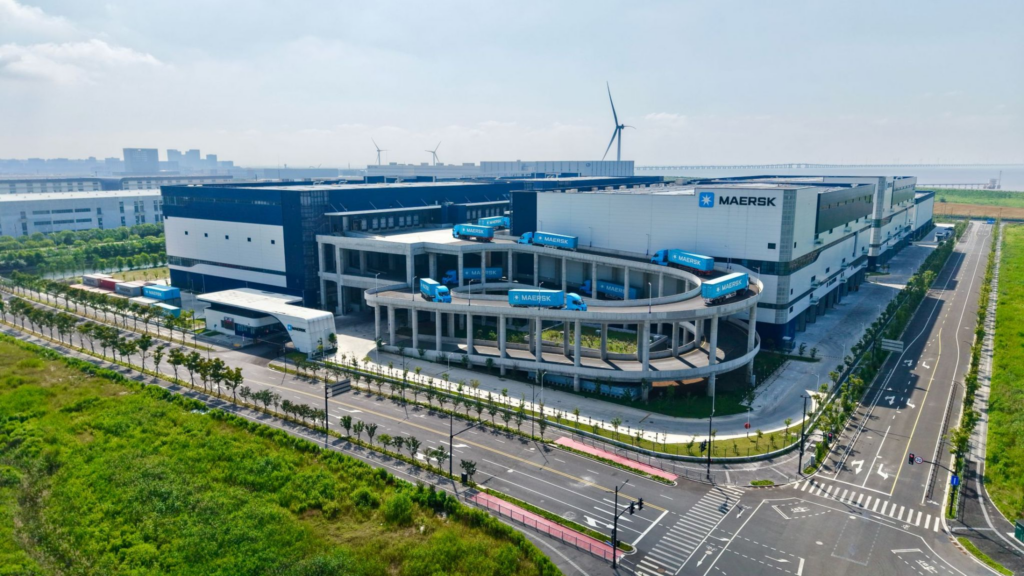
The implementation follows the opening of the Lin-gang mega-facility in November 2025, which acts as a primary fulfillment anchor for Maersk’s domestic and international trade loops in East Asia.
Electrifying the Yangshan Port Drayage Corridor
The newly commissioned fleet of heavy-duty electric trucks is assigned to run regular container drayage loops directly linking the Lin-gang logistics complex with the marine terminals at Shanghai Yangshan Port. This high-volume highway corridor is a critical artery for Chinese export manufacturing and retail import distributions.
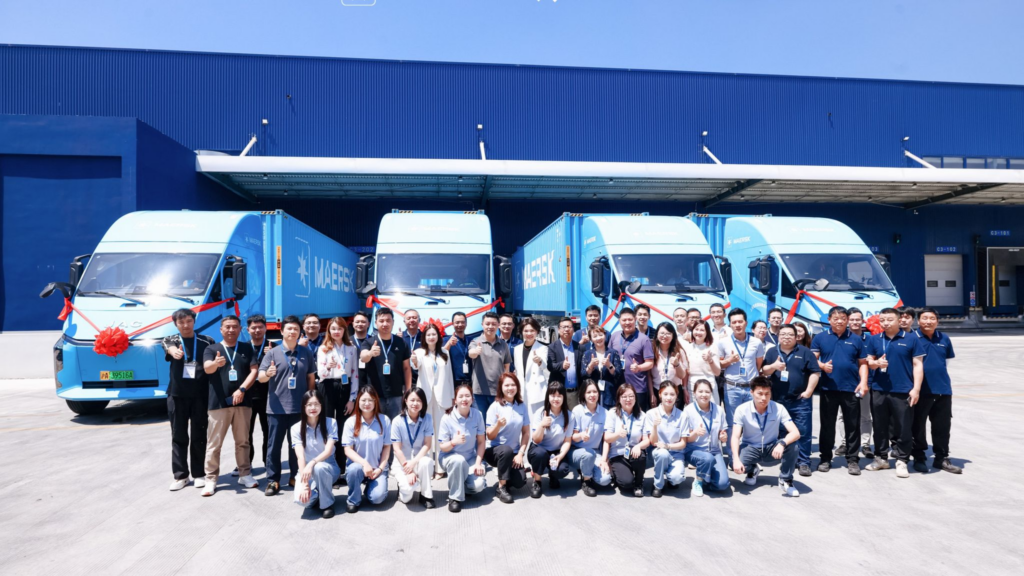
By inserting battery-electric heavy trucks into this specific loop, Maersk secures several operational and environmental advantages:
- Decarbonized Port Shunting: Providing commercial shippers with verifiably lower greenhouse gas emission baselines for container transfers between warehouse loading docks and ocean-going vessels.
- Insulation from Fuel Volatility: Shifting from volatile diesel markets to electricity helps stabilize local inland transportation pricing for contract logistics clients.
- High-Efficiency Operational Drivetrains: Capitalizing on the high energy efficiency typical of electric vehicles compared to conventional combustion engines during stop-and-go port terminal idling.
Integrating Warehousing with Maritime Services
The Lin-gang Flagship Logistics Centre serves as a major hub for automated warehousing and distribution, managing both bonded and non-bonded cargo flows under a single roof. The addition of an active electric truck fleet allows Maersk to more tightly connect the center’s warehouse operations with its landside transport network and global ocean services.
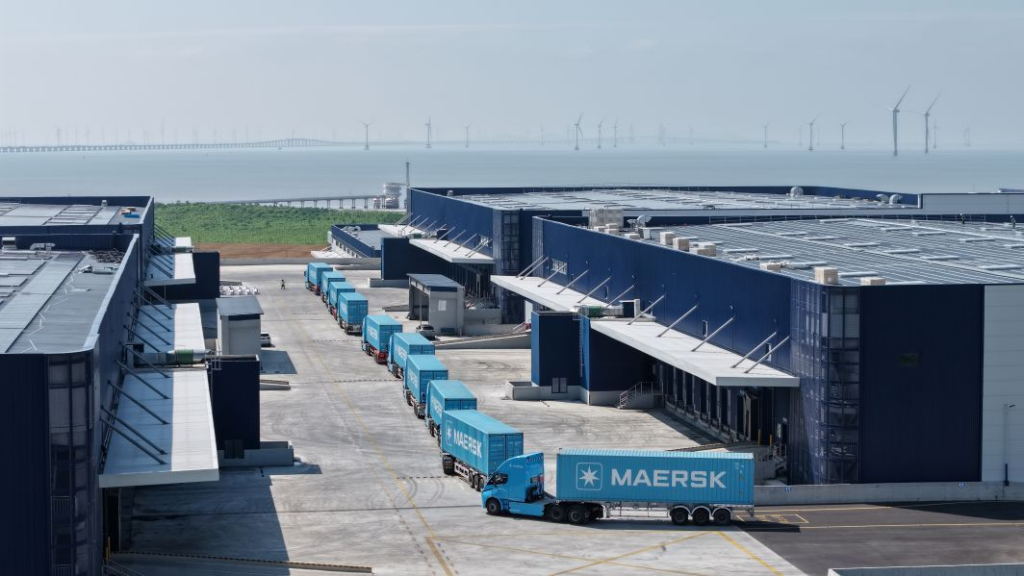
This network scale enables automated data syncing, where warehouse inventory pulling, customs clearance protocols, and container shunting are tightly coordinated to lower port terminal dwell times and prevent container demurrage fees.
Furthermore, the green drayage initiative complements the Lin-gang facility’s existing eco-efficient infrastructure, which utilizes extensive rooftop solar panels to generate a significant portion of the site’s total electricity requirements. The complete operational loop moves Maersk closer to its broader corporate strategy of scaling zero-emission inland freight capabilities across major global shipping hubs.
อัพเดตข่าวสารและบทความที่น่าสนใจในอุตสาหกรรมโลจิสติกส์ก่อนใคร ผ่าน Line Official Account @Logistics Mananger เพียงเพิ่มเราเป็นเพื่อน @Logistics Manager หรือคลิกที่นี่