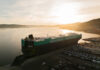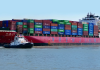

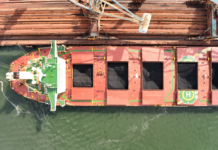
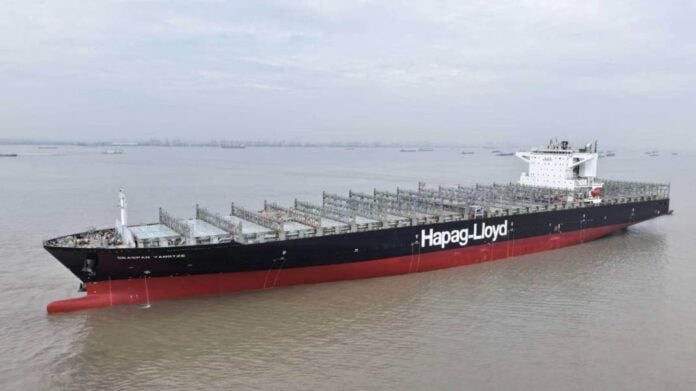
Hapag-Lloyd and Seaspan Corporation have finalized the first successful commercial deployment of their joint maritime engineering program, completing the dual-fuel methanol conversion of the Seaspan Yangtze. The project represents a major technical milestone, marking the first time a large-scale, 10,100 TEU mainline container vessel has been structurally retrofitted from conventional heavy fuel oil to low-carbon methanol capability.
The vessel is the first installment of a broader five-ship retrofit initiative valued at approximately USD 120 million, managed in close technical cooperation with maritime engineering firm Everllence.
Technical Engineering of the Dual-Fuel Conversion
The structural overhaul focused on converting the vessel’s existing conventional MAN S90 internal combustion engine into an advanced dual-fuel injection system. This configuration allows the ship to seamlessly transition between standard marine fuels and green methanol based on regional supply availability and environmental regulations.
The multi-million dollar engineering upgrade introduces several structural and operational adjustments:
- Fuel System Re-Engineering: Modifying the main engine cylinder heads, installing high-pressure methanol fuel injection valves, and running dedicated double-walled fuel lines.
- Asset Lifecycle Extension: Upgrading an existing hull and main engine framework eliminates the massive scope 3 manufacturing emissions and capital expenditures associated with building a brand-new vessel from scratch.
- Operational Fuel Flexibility: The dual-fuel matrix ensures the vessel can maintain standard liner schedules even when calling at ports with limited alternative-fuel bunkering infrastructure.
The remaining four 10,100 TEU sister ships scheduled to undergo identical engineering retrofits under this investment framework include the Seaspan Amazon, Seaspan Ganges, Seaspan Thames, and Seaspan Zambezi.
Driving Absolute Carbon Reductions in the Ocean Fleet
When operating on low-carbon or green bio-methanol, each retrofitted vessel is projected to cut its greenhouse gas footprint by approximately 30,000 to 50,000 metric tons of CO2 equivalent (CO2e) per year. This deep-sea emission reduction directly supports Hapag-Lloyd’s corporate climate mandate to achieve absolute net-zero fleet operations across its entire global network by 2045, five years ahead of the standard IMO 2050 targets.
Silke Lehmköster, Managing Director Fleet at Hapag-Lloyd, stated that retrofitting existing vessels serves as an important strategic lever for decarbonizing fleet operations by 2045. She noted that the successful conversion of the Seaspan Yangtze proves that close technical cooperation with strong partners can make proven, existing vessels ready for low-carbon alternative fuels, giving global shippers a concrete tool to build more sustainable supply chains.
Adapting Existing Tonnage to Tightening Climate Mandates
The container shipping sector faces tightening regulatory frameworks, including the European Union’s Emissions Trading System (EU ETS) and the FuelEU Maritime initiative, which penalize carbon-intensive vessel operations. Because building new green-fueled ships requires multi-year shipyard wait times, retrofitting existing, mid-life container vessels has emerged as a critical speed-to-market solution.
By combining newbuilding programs with aggressive dual-fuel retrofits, hydrodynamic hull efficiency adjustments, and the proactive sourcing of alternative fuels, Hapag-Lloyd and Seaspan are establishing a scalable blueprint for the transition toward low-carbon shipping without disrupting global container capacity.
อัพเดตข่าวสารและบทความที่น่าสนใจในอุตสาหกรรมโลจิสติกส์ก่อนใคร ผ่าน Line Official Account @Logistics Mananger เพียงเพิ่มเราเป็นเพื่อน @Logistics Manager หรือคลิกที่นี่