

Final Vessel of Hamburg Express Class Symbolizes Dual-Fuel Commitment and Strategic Hub Importance for Gemini Cooperation
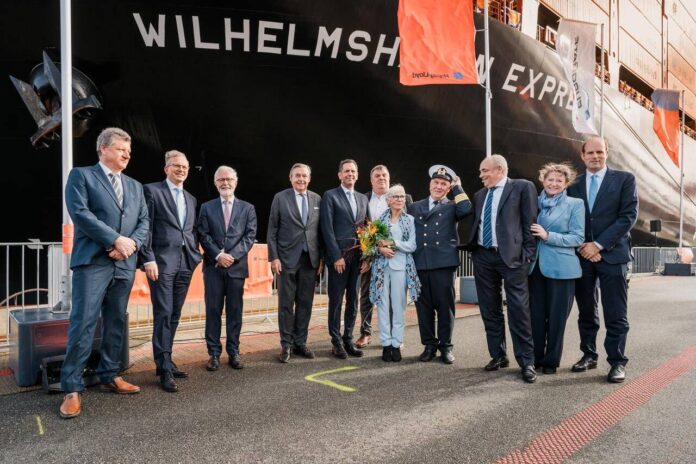
Hapag-Lloyd recently marked a major corporate and environmental milestone with the christening of the “Wilhelmshaven Express” at the Jade Weser Port in Wilhelmshaven. The ceremony not only named a state-of-the-art container vessel but also signaled the completion of a transformative three-year, twelve-vessel newbuild program—one of the most significant fleet investments in the company’s history, valued at USD 2 billion.
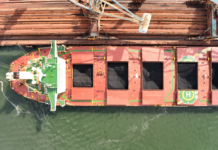
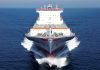
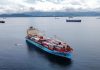
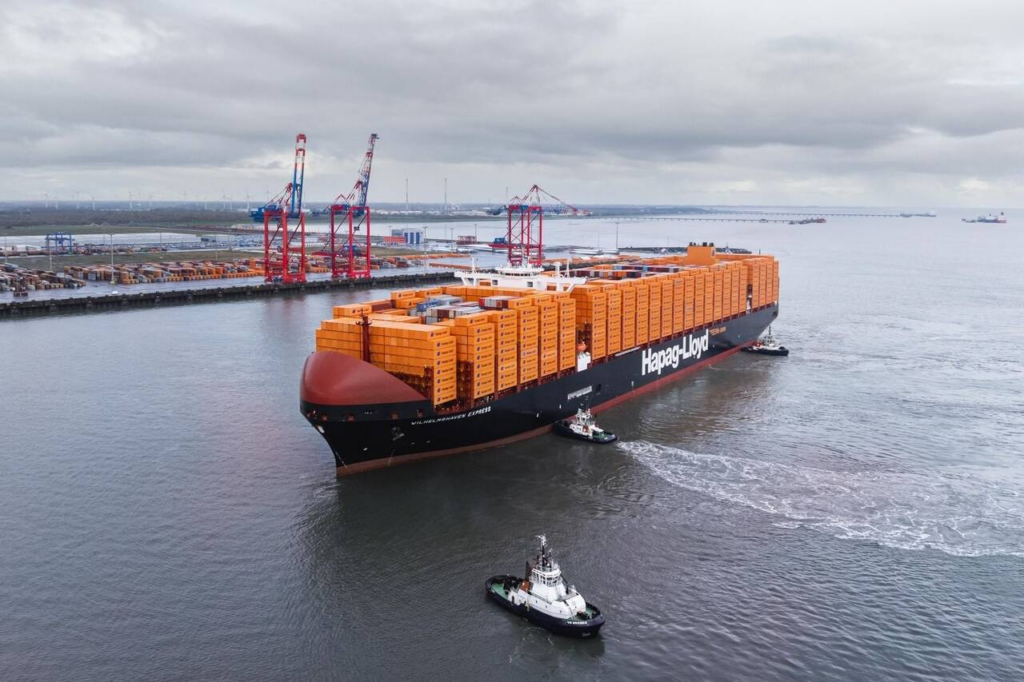
The “Wilhelmshaven Express” is the 12th and final ship in the Hamburg Express class, an ultra-large vessel series that sets new benchmarks for sustainability and productivity in the liner shipping industry. With a capacity of 23,660 TEU and advanced dual-fuel propulsion (capable of running on Liquefied Natural Gas (LNG) and biomethane), the vessel is designed to reduce CO₂ emissions by up to 25 percent compared to conventional designs. Wibke Friedrichs, wife of former Hapag-Lloyd COO Anthony Firmin, served as the ship’s naming patron.
Commitment to Decarbonization and Growth
The completion of the Hamburg Express class represents a core pillar of Hapag-Lloyd’s strategy to achieve net-zero fleet operation by 2045. Each vessel, measuring 399 meters in length, was built at the Hanwha Ocean shipyard in South Korea and is equipped with cutting-edge technology to minimize its environmental footprint.
Rolf Habben Jansen, CEO of Hapag-Lloyd, emphasized the dual importance of the new fleet. “The ‘Wilhelmshaven Express’ and its eleven sister vessels are a symbol of our unwavering commitment to continuously lower emissions, to quality leadership, and to long-term strategic growth,” he said.
The vessel is deployed on the Gemini Cooperation’s NE1 service, connecting Asia and Northern Europe with maximum efficiency. Habben Jansen also acknowledged the strategic role of the Container Terminal Wilhelmshaven, calling the deep-water port “an essential hub for Hapag-Lloyd and the Gemini Cooperation” due to its efficient cargo handling and direct connections to key global trade lanes.
Looking Ahead: The Next Generation of Sustainable Vessels
Hapag-Lloyd is already preparing for its next major fleet expansion phase, which will involve the delivery of 24 new state-of-the-art vessels between 2027 and 2029. This program includes:
- 12 newbuildings with a capacity of 16,800 TEU each.
- 12 newbuildings with a capacity of 9,200 TEU each.
All 24 ships will feature low-emission, high-pressure liquefied gas dual-fuel engines that are highly fuel-efficient and designed to be capable of operating on biomethane. The company estimates that running these vessels on biomethane can further reduce CO₂ emissions by up to 95% compared to conventional propulsion systems, cementing Hapag-Lloyd’s path toward a modernized and sustainable fleet.
อัพเดตข่าวสารและบทความที่น่าสนใจในอุตสาหกรรมโลจิสติกส์ก่อนใคร ผ่าน Line Official Account @Logistics Mananger เพียงเพิ่มเราเป็นเพื่อน @Logistics Manager หรือคลิกที่นี่