





CEVA Logistics, a leader in third-party and finished vehicle logistics, has launched a comprehensive reverse logistics solution dedicated to the transport, storage, and processing of end-of-life electric vehicle (EV) batteries across Europe. This multi-million-euro commitment is a response to the estimated eight million lithium-ion batteries expected to reach end-of-life in Europe over the next five years, aligning CEVA’s operations with the automotive industry’s push for circular value chains and evolving regulatory demands.
The company aims to address 80% of European EV battery reverse logistics volumes by 2030.
Strategic Pillars and Network Expansion
CEVA’s new service provides automotive manufacturers with a reliable, scalable solution focused on maximizing value recovery and ensuring strict regulatory compliance:
- Pan-European Collection and Transport: Utilizing its specialized, ADR-compliant fleet, CEVA will collect batteries throughout Europe from car dealerships, resellers, and end-of-life vehicle centers, then transport them for processing or directly to recyclers.
- Value-Added Processing: At its dedicated centers, CEVA will perform critical services including battery diagnosis, deep discharge, dismantling, regeneration, and reconditioning to facilitate reuse or recycling.
- Traceability and Transparency: A real-time tracking system is implemented to monitor each battery’s journey, providing enhanced traceability and full transparency of its status.
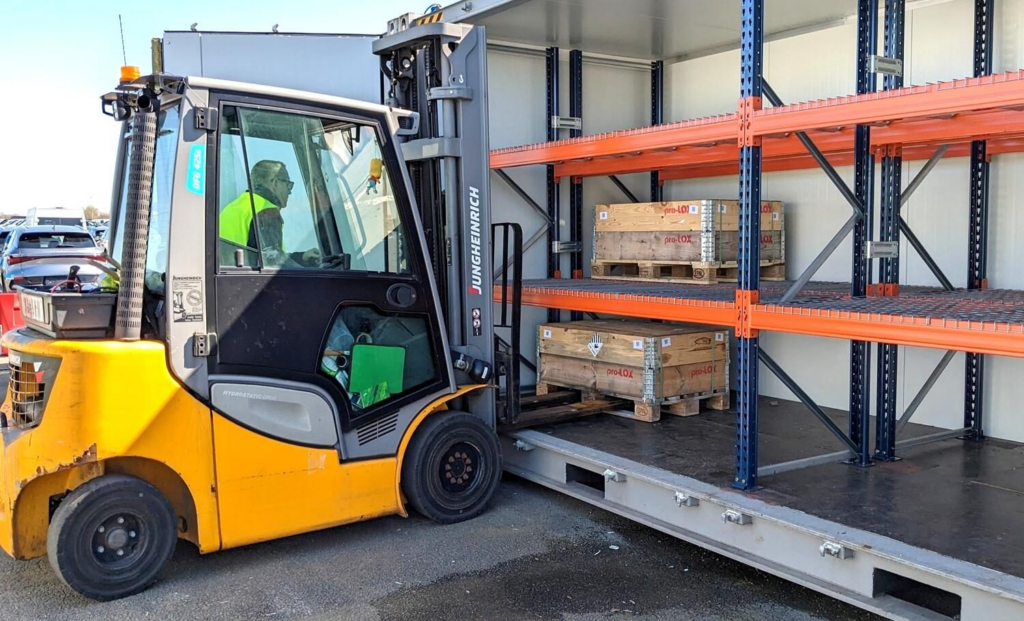
The reverse logistics network is expanding rapidly across the continent, building on a successful trial program running since 2022 at its Ghislenghien, Belgium FVL hub. The first operational Battery Logistics Centers are being installed in France, the United Kingdom, and Spain by the end of 2025. This will be followed by additional centers in Germany, Italy, Poland, Sweden, Switzerland, the Netherlands, and the Czech Republic in 2026 and 2027, bringing the total expansion to 10 European countries.
The Battery Logistics Centers are secured with specialized storage, temperature-controlled containment units, and 24/7 alarm systems, reflecting the high safety standards required for handling this hazardous cargo.
Mathieu Friedberg, CEO of CEVA Logistics, stated that the initiative is essential given the challenges of recycling and reusing batteries, allowing CEVA to propose “robust and virtuous solutions to support the automotive sector in strengthening the circular economy.”
The new system’s stringent safety and tracking requirements are directly influenced by the European Union’s Battery Regulation (EU) 2023/1542. This regulation mandates extended producer responsibility, sets ambitious targets for material recovery (e.g., 90% for cobalt, copper, and nickel by 2027), and requires new transparency measures such as the Digital Battery Passport for EV batteries by February 2027. CEVA’s focus on traceability and value-added services positions it to help manufacturers meet these legally binding circular economy targets.
อัพเดตข่าวสารและบทความที่น่าสนใจในอุตสาหกรรมโลจิสติกส์ก่อนใคร ผ่าน Line Official Account @Logistics Mananger เพียงเพิ่มเราเป็นเพื่อน @Logistics Manager หรือคลิกที่นี่