



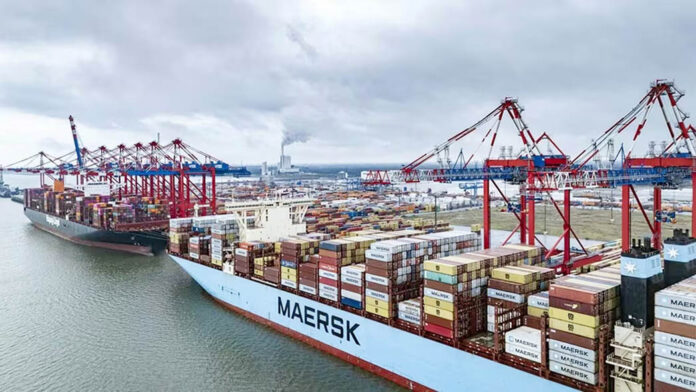
Hapag-Lloyd and Maersk have announced a strategic shift for their shared Gemini Cooperation network, marking the first return of a major mainline service to the Red Sea and Suez Canal. After a year of predominantly Cape of Good Hope routings, the partners have cleared the ME11 service to resume transit through the high-stakes maritime corridor, backed by comprehensive naval assistance.
The move is seen as a “litmus test” for the Gemini Cooperation’s goal of achieving 90% schedule reliability, as the Suez route significantly reduces transit times between the Indian Subcontinent and the Mediterranean.
The ME11 Service: A Strategic Link
The ME11 service acts as a vital artery connecting India and the Middle East with Southern Europe. The transition began in mid-February 2026 with the following vessels:
- Westbound: Commencing with the Albert Maersk.
- Eastbound: Commencing with the Astrid Maersk.
By reverting to the Suez Canal, these vessels avoid the lengthy 10-to-14-day detour around the southern tip of Africa, allowing for faster equipment turnover and reduced fuel consumption for Indian exporters.
Phased Expansion and Security Protocols
While the ME11 is the first to transition, Maersk and Hapag-Lloyd have signaled that the AE12 and AE15 services (connecting Asia to Europe) are next in line for Suez transit, pending ongoing security assessments.
Safety and Support Measures:
- Naval Escorts: All Gemini transits through the Gulf of Aden and the Red Sea are coordinated with international naval task forces to ensure the safety of the crew and cargo.
- Dynamic Monitoring: Both carriers maintain 24/7 security hubs to monitor regional stability. Any escalation in conflict will trigger an immediate return to the Cape of Good Hope routing.
- Minimal Disruption: The implementation is being managed through the Gemini “hub-and-spoke” model, ensuring that feeder connections in the Mediterranean and the Middle East remain synchronized despite the change in mainline arrival times.
One Year of Gemini Cooperation
Launched on February 1, 2025, the Gemini Cooperation has reached its one-year milestone with a network of 29 shared mainliners and 29 dedicated shuttles. This latest decision highlights the alliance’s agility in navigating geopolitical volatility while maintaining its “trademark” reliability.
At this stage, no further changes to other Gemini routes are planned, as the partners continue to prioritize a “safety-first” approach to the Red Sea corridor.
อัพเดตข่าวสารและบทความที่น่าสนใจในอุตสาหกรรมโลจิสติกส์ก่อนใคร ผ่าน Line Official Account @Logistics Mananger เพียงเพิ่มเราเป็นเพื่อน @Logistics Manager หรือคลิกที่นี่